
Nov 19, 2025 · 6 min read
Why AI licenses aren't enough.
By Jeff Schacher
I talk with real estate companies every day about AI adoption. Property managers, developers, investment firms, lenders. And I keep seeing the same pattern.
There's enthusiasm at the top. The CEO or COO gets it. They believe AI is going to transform the industry. Some have purchased licenses for AI assistants. Some have brought in consultants or hosted training sessions.
In practice, people can still be unsure what to use it for.
Buying access is a start. People also need to know which tasks to try, what information to provide, and how to check the result. A colleague who has spent months experimenting has had time to learn those things. Someone opening the tool for the first time has not.
What people need to learn
An AI chat can be easy to start. Producing useful work takes more practice.
With many tools, training focuses on where to click and which steps to follow.
With AI, much of the work is explaining the task, providing context, and reviewing the response. Two people using the same AI tool get completely different results based on how they communicate with it.
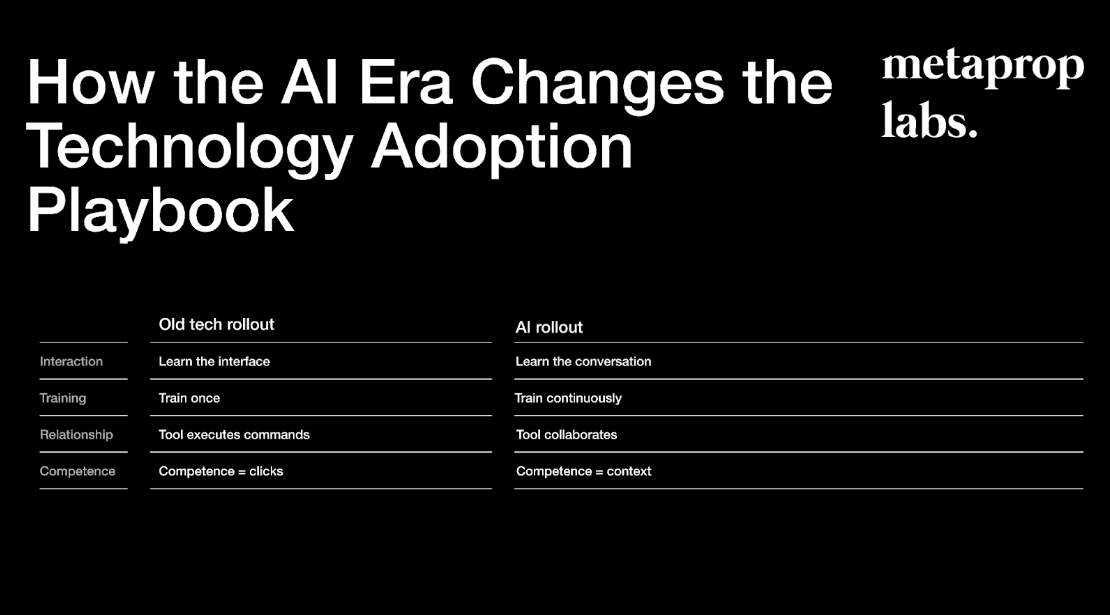
That leaves a few practical needs:
-
Leaders need practice too. Using AI on a few familiar tasks helps leaders judge proposed uses and understand where the team needs support.
-
Teams need help after the introduction. One training session doesn't build capability. Many people try AI a few times, get mediocre results, and give up or just use it for the easy stuff. They don't know how to make things better or what they should even be using it for.
-
Tool and data rules need to be clear. Without leadership understanding and systematic training, people may use tools or share data that your firm has not approved.
Give leaders time to practice
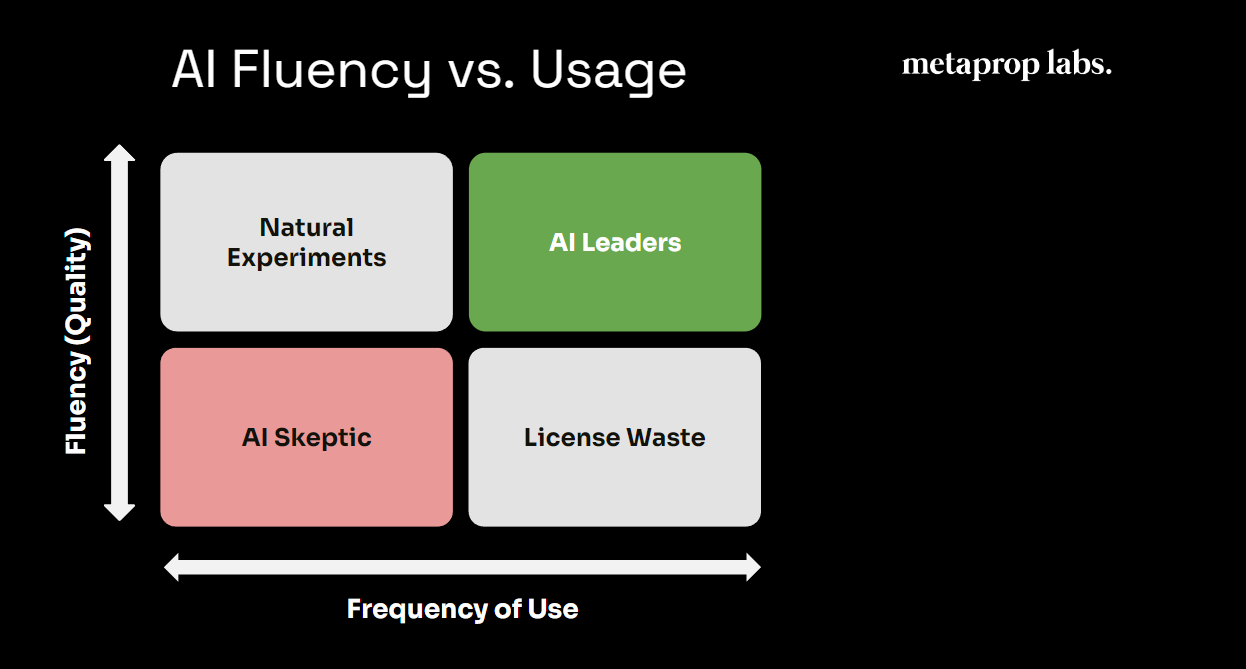
CEOs and COOs understand that AI is important. They've read the articles, used ChatGPT. But many haven't developed real fluency themselves.
Teams take cues from their leaders. Making time to learn, asking about results, and discussing mistakes shows that this is part of the work.
Leaders should practice on work they understand well enough to judge. Bring a draft report, a meeting summary, or a recurring analysis to a session. Notice where the tool helps and where it needs more guidance.
You do not need to become a developer to set priorities. You do need enough experience to ask useful questions about the work and its limits.
Help people through the first failed attempts
Even after training, some people find useful applications quickly while others get stuck.
When I talk to employees, I hear the same three things:
- "I don't have time to learn this"
- "For many tasks it's faster to do it myself"
- "I don't know what I should be using it for"
Think about learning a new language. You don't take a four-hour Spanish class and become fluent. You need continuous practice and you need an expert to go back to and ask for help when you get stuck.
The same need for practice applies here.
A bootcamp teaches the basics: how to write prompts with context, how to provide context, what's possible. People leave excited and try things.
Some responses are helpful. Some are close but not quite right. They go back and forth, trying to refine it, but it starts to feel like a waste of time to get the AI's response good enough.
For example, imagine a property manager who takes the bootcamp and tries using AI to draft their quarterly market update to owners. They provide context: the occupancy rates, rent trends, comparable properties. They go back and forth with the AI to add the right analysis. They refine the prompt. They try again. After twenty minutes, they think "I could have done this faster myself." The excitement fades and it's back to the old way next quarter.
Think about training an intern. You'd write documentation explaining what you want them to do, give them examples. But with AI, people write a few sentences and get frustrated when it doesn't perform the way they think it should.
Working with AI requires clear communication and effective delegation. These skills can be learned, but it takes experimentation and ongoing guidance.
AI training gets people started. Ongoing support builds capability. Someone needs to own that support and make time for it.
Make the rules easy to follow
An approval policy should tell people which tools they can use, what data they can provide, and how to get help. If those answers are unclear, employees may either avoid the tools or make their own decisions.
Give the team a place to share experiments and ask questions. A useful workflow should be easy for colleagues to find, review, and adapt.
What you need: clear policies on what's encouraged versus restricted, official tools with support, and a culture where experimentation is expected and visible, not hidden.
Make practice part of the work
A useful learning program gives people time to try a real task and return with questions. The next session can focus on where they got stuck: missing context, unclear instructions, a tool limitation, or an output they could not trust.
Protect some time for that practice. Ask teams to share failed attempts as well as useful results. Keep successful skills and examples in a shared place, with someone responsible for maintaining them.
When a person leaves or changes roles, colleagues should be able to find the workflow, understand its limitations, and continue improving it.
Start with what people have tried
Ask people which tasks they have tried and where the result fell short. Compare that with the work you want the team to do. Some may need an introduction; others may need help designing a more complex workflow.
Give them an approved tool, a task to practice on, and someone to ask for help. Review what happened at the next session. Did it save time after checking? Was the result useful? What needs to change?
Those answers will tell you more than license counts alone.